Helpful Probate Resources

Essential California probate resources including court information, attorney directories, probate forms, timelines, and guides. Find answers to common probate questions and learn how probate advances can help during the estate settlement process.

contra costa county

Contra Costa County Probate Resources: Court Guide

If someone in your family died owning property in Contra Costa County, the estate will most likely go through probate at the Contra Costa County Superior Court in Martinez. Knowing where to file, how the court flags problems, and which deadlines matter can save you weeks of back and forth.

This guide pulls together the Contra Costa County probate resources executors and heirs ask about most, with links to the court’s own pages.

Quick Answer: Contra Costa County probate cases are filed and heard at the Wakefield Taylor Courthouse, 725 Court Street, Martinez, in Departments 30 and 38. Probate examiners post calendar notes on the court’s Public Portal about 6 to 8 days before each hearing, and any fix must be filed at least 5 days before the hearing to be considered.

Where Probate Cases Are Filed in Contra Costa County

All probate, guardianship, and conservatorship documents in Contra Costa County are filed and heard at the Wakefield Taylor Courthouse in Martinez. That is true whether the decedent lived in Richmond, Walnut Creek, Antioch, or San Ramon.

The courthouses in Pittsburg, Richmond, and Walnut Creek handle other case types. Probate does not go there.

ItemDetails
CourthouseWakefield Taylor Courthouse, 725 Court Street, Martinez, CA 94553
Probate departmentsDepartment 30 and Department 38
Wills, trusts, and estates information(925) 608-2613
Ex parte hours9:00 to 11:00 a.m., Room 210 (sign in 8:00 to 9:00 a.m.)
Calendar notesCourt Public Portal, about 6 to 8 days before the hearing
Last day to file a fix5 days before the hearing

How a Contra Costa Probate Case Moves Forward

Most estates start with a Petition for Probate, Judicial Council form DE-111. The court posts a probate forms packet built around that petition on its probate page.

Before the first hearing, the petitioner gives notice to heirs and beneficiaries and publishes notice of the petition in a newspaper. If the judge grants the petition, the executor or administrator receives Letters, the court document that gives them legal authority to act for the estate.

From there, the personal representative gathers assets, has them appraised, handles creditor claims, and finally asks the court to approve distribution. A simple estate often takes a year or more. A house sale, a dispute between heirs, or a late creditor can add months.

Contra Costa Probate Calendar Notes

Calendar notes are where most delays in Contra Costa probate start, so it pays to read them as soon as they post.

What are probate calendar notes?

The court’s probate examiners review every petition and proposed order before the judge acts on it. They publish calendar notes that list any legal problems they find in each case. The notes are usually available on the court’s Public Portal 6 to 8 days before the hearing.

What does “NEEDED” mean on my calendar notes?

An item marked NEEDED is something the court expects you to fix before the hearing. Fixing it usually means filing an amended or supplemental pleading that follows the Rules of Court. Pleadings must be filed at least 5 days before the hearing to be considered, so a late fix can push your matter to a later date. The court explains the process on its probate calendar notes page.

Zoom Hearings and Ex Parte Requests

The probate department holds hearings on Zoom. The court only lets people in from the waiting room if their full first and last name is showing, and video must be on. A phone number, nickname, or partial name can keep you out of your own hearing.

Ex parte applications are decided on the papers, not in a courtroom. You present them to the probate examiners in Room 210 between 9:00 and 11:00 a.m., after signing in between 8:00 and 9:00 a.m. The court contacts you when the order is ready to pick up.

Waiting on a Contra Costa estate and need cash now? ProbateLend can advance part of your inheritance while the case moves through Martinez. See how a Contra Costa County probate advance works, or call 888-333-1090.

Records, Forms, and Fees

You can look up case information on the court’s Public Portal. Minutes, case documents, and orders are not available online, so you have to request copies from the court’s records office.

Filing fees follow the court’s current civil fee schedule. The court’s fees page has the schedule and explains how to ask for a fee waiver if you cannot afford the filing fee.

The court’s Probate Facilitator only helps self-represented people with guardianship or limited conservatorship of a person. The facilitator does not help with estates of people who have died, so most executors work with a probate attorney. Our California probate attorney directory lists attorneys by county.

What Heirs Can Do While the Case Is Open

Contra Costa probate can stretch well past a year, especially when a family home in Concord, Lafayette, or Danville has to be sold before distribution. Your bills do not wait for the court.

A probate advance gives you part of your expected inheritance now. It is not a loan, there are no monthly payments, and it is repaid from your share when the estate distributes. If you want to know what to gather first, review the documents needed for an inheritance advance.

Contra Costa County Probate FAQs

Where do I turn in an original will in Contra Costa County?

California Probate Code Section 8200 requires whoever has the original will to deliver it to the superior court clerk in the county where the decedent lived within 30 days after learning of the death. In Contra Costa County, probate documents go to the Wakefield Taylor Courthouse in Martinez. Keep a copy for yourself before you turn in the original.

How long does an executor have to file the inventory and appraisal?

Under Probate Code Section 8800, the personal representative must file the inventory and appraisal within 4 months after Letters are issued. Non-cash assets such as real estate are valued by a probate referee appointed through the State Controller. A late inventory is a common reason a Contra Costa case stalls.

What is the creditor claim deadline in a California probate?

Creditors generally have until the later of 4 months after Letters are first issued or 60 days after notice was mailed to them (Probate Code Section 9100). The estate cannot make a final distribution until that window closes, which is one reason most estates take at least several months.

Do conservators in Contra Costa County need training?

Yes. The court requires people appointed as conservators, other than professional fiduciaries, to complete a Conservatorship Workshop. You sign up in advance through the Contra Costa County Public Law Library at (925) 655-4627.

The Bottom Line

Contra Costa probate runs through one courthouse in Martinez, and most delays come from problems flagged in the calendar notes. Check your notes early, fix anything marked NEEDED at least 5 days before the hearing, and keep copies of everything you file. If the wait itself is the problem, ProbateLend can help you get part of your inheritance now.

Recent Articles

probate advance approval

Why Wait? Get Probate Cash Now

The California probate process can take 12 months or more. If you can’t wait for your inheritance, we have you covered! Our simple application and streamlined underwriting can get money in your pocket within 24 hours. Probate Lend provides the best pricing and service for all California Counties.

Contra Costa County Probate Resources: Court Guide Read More »

santa barbara county courthouse

Santa Barbara County Probate Resources: Court Guide

Santa Barbara County is one of the few California counties that splits probate between two courthouses. Where your case is heard decides the hearing day, the clerk you call, and even whether you can email the probate examiner.

This guide collects the Santa Barbara County probate resources executors and heirs need most, with links to the court’s own pages.

Quick Answer: South County probate cases are heard Thursdays at 9:00 a.m. in Department SB 5 at the Anacapa Division, 1100 Anacapa Street, Santa Barbara. North County cases are heard at the Cook Division, 312 E. Cook Street, Santa Maria, on Mondays, Tuesdays, and Wednesdays. Probate notes post about one week before each hearing.

South County vs North County Probate Courts

The Superior Court of California, County of Santa Barbara, hears probate in two divisions. In general, South County cases come from Santa Barbara, Goleta, Carpinteria, and Montecito, and North County cases come from Santa Maria, Lompoc, Orcutt, and the Santa Ynez Valley. If you are not sure which calendar your case belongs on, ask the probate clerk before you file.

DivisionAddressProbate hearingsProbate clerk
South County (Anacapa Division)1100 Anacapa Street, Santa Barbara, CA 93101Thursdays, 9:00 a.m., Dept. SB 5805-882-4520
North County (Cook Division)312 E. Cook Street, Building E, Santa Maria, CA 93454Mon 8:30 a.m. (Dept. SM 4), Tue 9:00 a.m. (Dept. SM 2), Wed 8:30 a.m. (Dept. SM 1)805-614-6414

Both probate clerk offices are open 9:00 a.m. to 3:00 p.m., Monday through Friday, except court holidays. The South County mailing address is P.O. Box 21107, Santa Barbara, CA 93121-1107. North County mail goes to 312-C East Cook Street, Santa Maria, CA 93454.

What the Probate Clerk Can and Cannot Do

The Probate Legal Process Clerk files documents in decedent estates, guardianships, and conservatorships. The clerk can help you figure out which forms you may need and check available hearing dates.

The clerk cannot give legal advice. Questions such as who should serve as executor, or whether an asset belongs in the estate, are for a probate attorney.

Santa Barbara Probate Notes

Before a judge acts on a petition, a probate examiner reviews it for content and legal requirements. The examiner’s findings are posted as probate notes, and they are the best early warning that your hearing may not go as planned.

Where do I find my probate notes?

Probate notes are posted on the court’s Tentative Rulings page about one week before the hearing. The court treats checking them as your job, so look early and look again closer to the date.

How do I fix a problem listed in my notes?

You cure a deficiency by filing a verified supplement or amendment under Local Rule 1721(c)(2)(2). Documents submitted after 5:00 p.m. three court days before the hearing may not be considered. If you need more time, you have to get a continuance under Local Rule 1722(a)(1). If the problem is not fixed and no continuance is in place, you are required to appear at the hearing.

Can I email the probate examiner?

Only for South County cases, and only to clarify a specific posted note or when the judge tells you to. The address is ProbateExaminer@sbcourts.org. Include the case number, hearing date, and the note you are asking about. The examiner will not give legal advice, emails with filings attached are ignored, and emails about North County cases are not answered.

Waiting on a Santa Barbara County estate? ProbateLend can advance part of your inheritance while the case works through either courthouse. Learn how a Santa Barbara County probate advance works, or call 888-333-1090.

Forms, Fees, and Records

Many probate cases need several Judicial Council forms plus documents prepared in pleading format under California Rules of Court, rule 2.100. The forms are revised often, so download fresh copies instead of reusing old ones. Incomplete or incorrect forms are a common reason a judge orders amendments or supplements, which adds time.

The court’s fee schedule is posted online and available at the clerk’s office. The Santa Barbara probate division page links to it, along with the probate self-help guide and court pages on referees, continuances, and objections.

You can search case information online after agreeing to the court’s usage terms. Under California Rules of Court, rule 2.503, some documents are not shown remotely, but they may be available at the court’s Records Department.

In North County, a free Probate Facilitator helps self-represented people with guardianship or conservatorship of the person only, not estates. The facilitator’s office is at 312 E. Cook Street, Building E, 2nd floor, Santa Maria (805-614-6622, or 805-614-6413 in Spanish). For an estate, most executors hire an attorney.

What Heirs Can Do While the Case Is Open

Santa Barbara estates often include high-value homes, rental property, or vineyard land, and selling any of it during probate takes time. Meanwhile, heirs still have rent, tuition, and medical bills.

A probate advance lets you receive part of your expected inheritance now, with no monthly payments and no personal liability. It is repaid from your share when the estate distributes. To see how the amount is set, read how probate advance companies decide how much to offer.

Santa Barbara County Probate FAQs

Do I have to publish notice of a probate petition in Santa Barbara County?

Yes. California Probate Code Section 8120 requires notice of the petition to be published in a newspaper of general circulation where the decedent lived. The Santa Barbara court posts a list of newspapers adjudged for legal advertising on its probate page, which helps you pick one the court will accept.

What is a probate referee?

A probate referee is an independent appraiser appointed through the California State Controller who values non-cash estate assets such as real estate and business interests (Probate Code Section 8920). Cash and similar items are valued by the personal representative. The referee’s fee is paid by the estate.

Can an executor sell a house during probate without a court hearing?

Often, yes. An executor with full authority under the Independent Administration of Estates Act can sell real property by giving heirs a Notice of Proposed Action instead of getting court confirmation (Probate Code Sections 10580 to 10592). If an heir objects, or the executor has only limited authority, the sale goes to the court for confirmation.

The Bottom Line

In Santa Barbara County, the first step is knowing which courthouse has your case. After that, most delays come from probate notes that were not addressed by the 3-court-day cutoff. Check your notes early, file fixes on time, and keep the right clerk’s number handy. If the wait is the problem, ProbateLend can help you get part of your inheritance now.

Recent Articles

probate advance approval

Why Wait? Get Probate Cash Now

The California probate process can take 12 months or more. If you can’t wait for your inheritance, we have you covered! Our simple application and streamlined underwriting can get money in your pocket within 24 hours. Probate Lend provides the best pricing and service for all California Counties.

Santa Barbara County Probate Resources: Court Guide Read More »

ventura county

Ventura County Probate Resources

Where Are Probate Matters Handled In Ventura County?

In Ventura County, all probate matters are handled by the Superior Court of California, County of Ventura. The main courthouse is in Oxnard is where probate cases are filed, processed, and resolved. This court deals with various aspects of probate, including estate administration, asset distribution, and resolving disputes among beneficiaries.

If The Deceased Person Resided And Died In One County, Can The Probate Be Filed In Another County?

No, The probate proceeding must be filed in the county where the decedent resided or owned real property.

How Do I File a Probate Petition In Ventura County?

A petition and the necessary fees are needed to start a probate case. If there is an original will, it should be filed at the same time you file the petition. The forms are available on the form packets page on the Ventura County Superior Court website.

Is There A Fee To Lodge A Will In Ventura County Probate Court?

There is $50 fee to lodge a will with the Ventura County courthouse. The court accepts a will only if the person is deceased.

How Do I Lodge a Will With The Ventura County Probate Court?

After the death of the testator, it is crucial to promptly lodge the will with the court. This involves submitting the original will to the probate clerk’s office. The court will then verify the authenticity of the will and proceed with the probate process accordingly.

What Happens at a Probate Hearing in Ventura County?

At a probate hearing in Ventura County, the judge reviews the case details, addresses any concerns or questions, and ensures that the estate administration is progressing correctly. Be prepared to provide updates and answer any inquiries.

How Important Are Regular Updates To The Probate Judge?

Regular updates to the current probate judge are essential for ensuring a smooth probate process. By keeping the judge informed, judicial proceedings can proceed efficiently, avoiding delays or misunderstandings.Using E-Filing for Probate Cases

Is Accessing the Ventura County eFiling System Hard?

To access the e-filing system for probate cases in Ventura County, you can typically visit the official website of the county probate clerk. Look for a designated section related to filing for probate cases. Once there, you may need to create an account or log in if you already have one.

Benefits of E-Filing

E-Filing for probate cases offers numerous advantages, including convenience and efficiency. Instead of physically visiting the probate clerk‘s office, you can submit necessary documents online from the comfort of your home or office. When utilizing the e-filing system for probate cases, ensure that you have all the necessary forms filled out correctly. Check for any specific formats required by the court to avoid delays in processing your case. Be prepared to pay any applicable filing fee online as part of the submission process.

What is the filing fee for a Petition for Probate In Ventura County?

A:  The fee for filing a Petition for Probate is $435.00. The fee for filing an Objection or Response to a Petition for Probate is $435.00. Certain subsequent petitions relating to probate are also $435.00. Please refer to the fee schedule for updated fee changes.Resources for Online Probate Assistance

What are Probate notes?

These are tentative rulings on Ventura County Probate cases that are set for hearing. Visit the Ventura County Tentative Rulings page for information.

How much will it cost to get certified copies of documents needed to conduct the business of the estate?

The certification fee is $40.00 plus 50 cents per page for the copy. ($40.50 for a one-page document). These documents will be issued, at your request, by the Probate clerk at the Juvenile and Probate Courthouse in Oxnard, after the initial hearing and after the court makes the order that the documents can be issued.

Will the Ventura County Probate Court appoint an attorney for me?

No, The court does not appoint attorneys for probate cases. You may hire private counsel of your choosing or contact the Ventura County Bar Association (www.vcba.org) for a referral.

Recent Articles

probate advance approval

Why Wait? Get Probate Cash Now

The California probate process can take 12 months or more. If you can’t wait for your inheritance, we have you covered! Our simple application and streamlined underwriting can get money in your pocket within 24 hours. Probate Lend provides the best pricing and service for all California Counties.

Ventura County Probate Resources Read More »

San Bernardino County courthouse building where probate cases are filed and heard

San Bernardino County Probate Resources

If you’re handling an estate in San Bernardino County, it helps to know that where probate is filed has changed in recent years. Here’s a current, practical rundown of San Bernardino County probate.

Quick Answer: Where Do I File Probate in San Bernardino County?

Probate matters in San Bernardino County are filed and heard at the Fontana District, 17780 Arrow Boulevard, Fontana, CA 92335, and the Victorville District, 14455 Civic Drive, Victorville, CA 92392, both reachable at (909) 521-3388. The Probate Clerk’s Office relocated from the old San Bernardino Justice Center to Fontana in February 2024, so older references to a San Bernardino District or Rancho Cucamonga location are outdated.

San Bernardino County Probate Court Locations, Contact Info, and Hours

Fontana District (Probate Clerk’s Office):
17780 Arrow Boulevard
Fontana, CA 92335
Phone: (909) 521-3388

Victorville District:
14455 Civic Drive
Victorville, CA 92392
Phone: (909) 521-3388

Hours:
Both locations: Monday through Friday, 8:00am to 4:00pm.

The Needles District also handles a narrower set of probate case types, including affidavits for real property of small value, guardianships, petitions to determine succession to real property, and petitions to establish facts of birth, death, or marriage. For most decedent’s estate matters, Fontana and Victorville are the two locations that matter.

What Is Probate?

Probate is the legal process of administering a deceased person’s estate: resolving debts, notifying heirs and creditors, and distributing assets under court supervision. For a broader overview of how the process works statewide, see our guide to the California Probate Code.

Filing Petitions Online

Person filing probate paperwork at a San Bernardino County courthouse clerk window

San Bernardino County offers the Court Access Portal (CAP) for filing probate petitions and motions online, which lets you submit documents, access forms, and receive email updates on your filing’s status without a trip to the courthouse. Probate Notes for scheduled hearings are also available through CAP, typically posted about two weeks before a hearing.

Do You Need Full Probate?

Probate isn’t always required. If the decedent held assets in a trust or with named beneficiaries, those assets can often bypass probate entirely. Living trusts, beneficiary designations, joint ownership with rights of survivorship, and transfer-on-death deeds are common ways estates avoid the process. For more on what happens when there’s no will guiding distribution, see our guide to probate in California without a will.

Getting Help

Contacting the Probate Clerk’s Office directly is the most reliable way to confirm filing procedures and document requirements for your specific case. For those who need broader legal assistance, the Legal Aid Society of San Bernardino and Inland Counties Legal Services can provide guidance for qualifying individuals.

Need Funds? ProbateLend Can Help

San Bernardino County probate cases can take months to fully resolve. If you’re facing expenses while a case works through the Fontana or Victorville District, a probate advance gives you access to a portion of your expected inheritance now instead of waiting for the estate to close.

Frequently Asked Questions

Where do I file a probate case in San Bernardino County?

Probate matters are filed and heard at the Fontana District, 17780 Arrow Boulevard, Fontana, CA 92335, and the Victorville District, 14455 Civic Drive, Victorville, CA 92392.

Has the San Bernardino County probate court location changed?

Yes. The Probate Clerk’s Office moved from the old San Bernardino Justice Center to the Fontana District in February 2024. Rancho Cucamonga is no longer a probate filing location.

Can I file probate petitions online in San Bernardino County?

Yes, through the Court Access Portal (CAP), which allows electronic filing, form access, and email status updates.

Is probate always necessary in San Bernardino County?

No. Assets held in a trust or with designated beneficiaries can often bypass probate entirely.

Can I get money from an estate before San Bernardino County probate closes?

Yes. An inheritance advance lets eligible heirs access part of their expected share before the estate distributes, without waiting for the court process to finish.

ProbateLend offers a San Bernardino County probate advance that gives heirs access to a portion of their inheritance now. Handling a San Bernardino County probate case doesn’t mean waiting on money that’s already yours. See if you qualify for a probate advance with ProbateLend.

probate advance approval

Why Wait? Get Probate Cash Now

The California probate process can take 12 months or more. If you can’t wait for your inheritance, we have you covered! Our simple application and streamlined underwriting can get money in your pocket within 24 hours. Probate Lend provides the best pricing and service for all California Counties.

San Bernardino County Probate Resources Read More »

Riverside County courthouse building where probate cases are filed

Riverside County Probate Resources: Get Help Now

If you’re handling an estate in Riverside County, one thing trips people up fast: probate isn’t handled at a single courthouse here. This guide covers the three regional probate filing locations, contact information, and what to expect if you’re opening a case.

Quick Answer: What Do I Need to Know About Riverside County Probate Court?

Riverside County probate cases are filed at one of three regional courthouses depending on the region: Riverside, Murrieta, or Palm Springs. Filing starts with a Petition for Probate, followed by notifying beneficiaries and creditors, inventorying assets, paying debts, and distributing what remains. Most Riverside County probate cases take 9 to 18 months, depending on the estate’s complexity and whether disputes arise.

Riverside County Probate Court Locations, Contact Information, and Hours

Riverside County splits probate filing across three regional courthouses, so the right location depends on where you live in the county.

Riverside Probate Court:

4050 Main Street
Riverside, CA 92501
Phone: (951) 777-3147

Southwest Justice Center (Murrieta):

30755-D Auld Road
Murrieta, CA 92563
Phone: (951) 777-3147

Palm Springs / Desert Probate Court:

3255 E Tahquitz Canyon Way
Palm Springs, CA 92262
Phone: (760) 393-2617

Hours:

Clerk’s offices are generally open Monday through Friday, 7:30 a.m. to 4:00 p.m., excluding court holidays, for in-person filing. Phone service is more limited, Monday through Friday, 7:30 a.m. to 2:00 p.m., with long wait times common. It’s best to call ahead to confirm hours before a visit.

Person filing a probate petition at a courthouse clerk window

What Does the Riverside County Probate Court Handle?

The probate division oversees estate administration after someone dies, along with guardianships and conservatorships for minors and adults who can’t manage their own affairs. The court validates wills, supervises asset distribution, resolves disputes among heirs, and oversees the payment of debts and taxes from the estate before anything is distributed to beneficiaries.

Steps for Filing Probate in Riverside County

Probate in Riverside County follows California’s general probate process. Here’s what filing typically involves.

Woman reviewing legal documents while preparing a Riverside County probate case

1. File a Petition for Probate

Start by filing a Petition for Probate at the courthouse serving your area, along with the required filing fee, which varies by estate size. If no will exists, the court appoints an administrator instead of an executor. See our guide on letters of administration for what that process involves.

2. Notify Interested Parties

Once filed, you’re required to notify all beneficiaries, creditors, and other interested parties about the proceedings.

3. Inventory and Appraisal of Assets

The estate’s assets need to be inventoried and appraised to establish an accurate value for the estate.

4. Pay Debts and Taxes

Outstanding debts and applicable taxes are paid out of the estate before any assets are distributed to heirs.

5. Distribute Assets

Once debts and taxes are settled, remaining assets are distributed to heirs and beneficiaries according to the will or California’s intestacy laws.

eFiling in Riverside County

Riverside County supports electronic filing for probate documents through approved third-party providers, which can save a trip to the courthouse for routine filings. Complex or actively disputed cases may still require traditional in-person filing. See the court’s eFiling Service Providers page for the current list of approved vendors.

Need Funds? ProbateLend Can Help

Person reviewing financial paperwork at home representing accessing an inheritance advance during probate

Probate often takes months, sometimes longer, leaving heirs waiting to access money that’s already theirs. If you’re facing expenses while a Riverside County case works its way through court, a probate advance in Riverside County gives you access to a portion of your expected inheritance now instead of waiting for the estate to close. There’s no credit check and no monthly payment, just a flat fee deducted from your share once the estate distributes.

Frequently Asked Questions

Where do I file a probate case in Riverside County?

It depends on where you live: the Riverside Probate Court at 4050 Main Street handles the Riverside region, the Southwest Justice Center in Murrieta handles the southwest region, and the Palm Springs court handles the desert region.

How long does probate take in Riverside County?

Most cases take 9 to 18 months, depending on the estate’s size and complexity and whether beneficiaries or creditors dispute anything.

What happens if there’s no will?

When someone dies without a will, the court distributes the estate according to California’s intestacy laws, which prioritize close relatives like spouses and children, and appoints an administrator to handle the estate instead of an executor.

Can I eFile my Riverside County probate documents?

Yes, for most routine filings. Complex or disputed cases may still need to be filed in person.

Can I get money from an estate before Riverside County probate closes?

Yes. An inheritance advance lets eligible heirs access part of their expected share before the estate distributes, without waiting for the court process to finish.

ProbateLend offers a Riverside County probate advance that gives heirs access to a portion of their inheritance now. Handling a Riverside County probate case doesn’t mean you have to wait on the money that’s already yours. See if you qualify for a probate advance with ProbateLend.

Recent Articles

probate advance approval

Why Wait? Get Probate Cash Now

The California probate process can take 12 months or more. If you can’t wait for your inheritance, we have you covered! Our simple application and streamlined underwriting can get money in your pocket within 24 hours. Probate Lend provides the best pricing and service for all California Counties.

Riverside County Probate Resources: Get Help Now Read More »

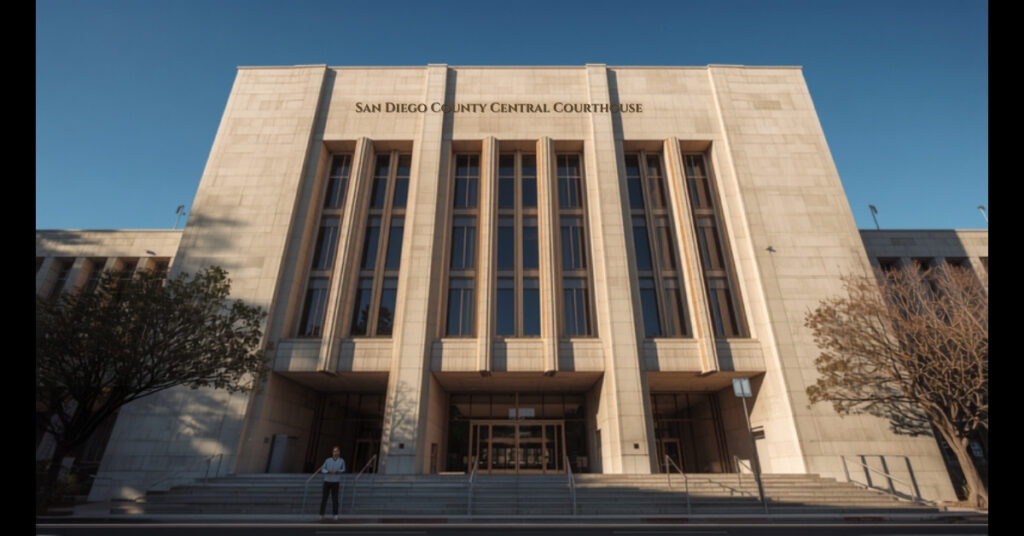
San Diego County Central Courthouse building where probate cases are filed and heard

San Diego County Probate Resources

If you’re handling an estate in San Diego County, knowing where to file, what the court expects, and where to find help makes the process much less overwhelming. Here’s a practical rundown of San Diego County probate.

Quick Answer: What Do I Need to Know About San Diego County Probate?

San Diego County probate cases are handled at the Central Courthouse, 1100 Union St., San Diego, CA 92101, on the Probate Business Office’s Third Floor, (619) 844-2676. The office is open 8:30am to 4:00pm Monday through Friday, and probate examiners are available by phone from 10:00am to 10:30am. Filing starts with a Petition for Probate, followed by notifying heirs and creditors, inventorying assets, and distributing the estate under court supervision.

San Diego County Probate Court Location, Contact Info, and Hours

Address:
Central Courthouse, Probate Business Office
1100 Union St., Third Floor
San Diego, CA 92101

Phone:
(619) 844-2676
Phone hours: 8:30am to 11:30am, Monday through Friday
Probate examiners available by phone: 10:00am to 10:30am

Hours:
Monday through Friday, 8:30am to 4:00pm, excluding court holidays.

San Diego County also has a second location, the North County Regional Center at 325 South Melrose Drive, Vista, CA 92081, but it only accepts probate filings by drop box on the First Floor. All mailed correspondence should go to the Central Courthouse address above, and it’s worth including a self-addressed stamped envelope or messenger slip if you need documents returned.

Person filing probate paperwork at a San Diego courthouse clerk window

What Is Probate?

Probate is the legal process of managing a deceased person’s estate, ensuring debts are paid and assets are distributed according to a will or California law if there isn’t one. For a deeper explanation of probate terminology, see our California probate terms glossary. The San Diego County Probate Court handles cases including decedent’s estates, guardianships, conservatorships, and trusts.

Key Steps in the San Diego County Probate Process

The general process looks like this:

  • Identify and confirm the proposed estate representative
  • File a Petition for Probate with the court
  • Notify heirs, beneficiaries, and known creditors
  • Inventory and appraise the estate’s assets
  • Pay valid debts and taxes owed by the estate
  • Distribute remaining assets to heirs and beneficiaries

Electronic filing through the county’s designated e-filing platform is common for represented parties, and the probate clerk’s office can point you to the correct portal. Costs and administrator responsibilities vary by estate size. See our executor and administrator fee calculator for more on what to expect.

Finding Legal Help in San Diego County

Person on the phone taking notes representing contacting legal aid for probate help in San Diego County

You aren’t required to hire an attorney to handle San Diego County probate, but many people choose to, especially for larger or contested estates. If cost is a concern, two local organizations offer free or low-cost help: the San Diego Volunteer Lawyer Program and the Legal Aid Society of San Diego. The California State Bar’s Lawyer Referral Service is another option if you’re looking for a paid probate attorney in the area.

Waiting on Your Inheritance? ProbateLend Can Help

Person reviewing financial paperwork at home representing accessing a California inheritance advance during probate

San Diego County probate cases can take months to fully resolve. If you’re facing expenses while a case works through the Central Courthouse, a probate advance gives you access to a portion of your expected inheritance now instead of waiting for the estate to close.

Frequently Asked Questions

Where do I file a probate case in San Diego County?

Probate cases in San Diego County are filed at the Central Courthouse, 1100 Union St., San Diego, CA 92101, on the Probate Business Office’s Third Floor. Some filings can also be dropped off at the North County Regional Center in Vista, but only via drop box.

What are the office hours for the San Diego Probate Business Office?

The office is open Monday through Friday, 8:30am to 4:00pm, excluding court holidays. Probate examiners are only available by phone from 10:00am to 10:30am.

Is there free legal help for probate cases in San Diego County?

Yes. The San Diego Volunteer Lawyer Program and the Legal Aid Society of San Diego both offer assistance for qualifying individuals dealing with probate matters.

How long does probate take in San Diego County?

Most California probate cases take 9 to 18 months, depending on the estate’s size and complexity and whether anyone contests the proceedings.

Can I get money from an estate before San Diego County probate closes?

Yes. An inheritance advance lets eligible heirs access part of their expected share before the estate distributes, without waiting for the court process to finish.

ProbateLend offers a San Diego County probate advance that gives heirs access to a portion of their inheritance now. Handling a San Diego County probate case doesn’t mean waiting on money that’s already yours. See if you qualify for a probate advance with ProbateLend.

probate advance approval

Why Wait? Get Probate Cash Now

The California probate process can take 12 months or more. If you can’t wait for your inheritance, we have you covered! Our simple application and streamlined underwriting can get money in your pocket within 24 hours. Probate Lend provides the best pricing and service for all California Counties.

San Diego County Probate Resources Read More »

Warm, modern courthouse hallway with wooden benches at Orange County Superior Court

Orange County Probate: Free Help Clearing Probate Notes

Quick Answer: Orange County offers free, in-person help for preparing probate paperwork through six Self-Help Centers with Live Self-Help Kiosk Services, plus a specific “Clearing Your Probate Notes” workshop for anyone whose petition was flagged by the court’s probate examiners. You don’t need an attorney to get help understanding what the court’s Probate Notes are asking you to fix.

Orange County’s probate process involves more moving pieces than a lot of filers expect, examiners, staff attorneys, published notes, glossaries. If you need cash before your case wraps up, our Orange County probate advance page has the quick overview. If you’re preparing to file or already stuck on a deficiency the court flagged, here’s where the real help is and how to use it.

What Are Probate Notes, and Why Do They Matter?

Every petition set for a hearing gets reviewed by a probate examiner three to four weeks beforehand. The examiner checks that your paperwork is complete and matches California law, local court rules, and notice requirements, then posts a written summary called Probate Notes if anything is missing or needs fixing. You can view your case’s notes online through the court’s Probate Notes system starting about three to four weeks before your hearing date. If you don’t clear the flagged issues before the hearing, expect a continuance rather than an approval.

Get Help Clearing Your Probate Notes

Orange County runs a dedicated “Clearing Your Probate Notes Workshop,” available in English, Spanish, and Vietnamese, specifically to help self-represented filers understand and fix what an examiner flagged. This is a genuinely useful resource that a lot of heirs and executors never find on their own, since it’s easy to assume a flagged petition means you need to hire an attorney immediately. The court also has a Probate Glossary to help decode the legal terminology that shows up in notes and forms.

Where to Get In-Person Help

Six Orange County courthouses offer Self-Help Center services covering probate matters, though the format differs by location:

  • Central Justice Center (Santa Ana): In-person assistance for probate, civil, small claims, and other matters, Monday-Thursday 8 a.m.-4 p.m., Friday 8 a.m.-3 p.m.
  • Costa Mesa Justice Complex, West Justice Center (Westminster), North Justice Center (Fullerton), and Harbor Justice Center (Newport Beach): Live Self-Help Kiosk Services covering probate and several other case types, same weekday hours

Costa Mesa Justice Complex is also where probate cases are actually heard and where the Probate Clerk’s Office is located, so it’s worth starting there if you’re filing new paperwork rather than just seeking guidance. If you need help specifically with a conservatorship, the court also runs an orientation session for new conservators. Whichever location you visit, bring a copy of your entire court file and a black pen, the self-help staff work from what you bring, not a court database lookup.

Checklist clipboard with a pen on a wooden desk

Forms, Local Rules, and Where to File

The court publishes both state Judicial Council forms and locally-approved Orange County forms for probate matters, along with the local Probate Rules of Court that supplement statewide procedure. For the actual courthouse address, contact information, and how to check your case status online, see our Orange County probate court guide, we won’t repeat that here.

Need Cash Before Your Probate Case Closes?

Clearing probate notes, attending hearings, and waiting on distribution can stretch a straightforward Orange County estate out for many months. If you’re an heir who needs money now rather than waiting for the process to finish, a probate cash advance lets you access a portion of your expected inheritance early, no monthly payments, repaid directly from your share once the estate closes. Read our step-by-step guide to how to get a probate advance in Orange County for the full application process.

Frequently Asked Questions

Do I have to pay for help at an Orange County Self-Help Center?

No, Self-Help Center services, workshops, and kiosk assistance are free. They can’t give you legal advice about your specific case, but they can help you understand forms, procedures, and what a probate note is asking for.

How long before my hearing can I see my Probate Notes?

Notes are typically posted online three to four weeks before your scheduled hearing date. Checking early gives you time to fix any flagged issues before the court reviews your case again.

What happens if I don’t fix an issue flagged in my Probate Notes before the hearing?

The judge generally can’t approve a petition with unresolved deficiencies, so an uncleared note usually means your hearing gets continued to a later date rather than granted, adding weeks or months to your timeline.

Is the Costa Mesa Justice Complex the only place probate cases are heard in Orange County?

Yes, all Orange County probate matters are heard at Costa Mesa Justice Complex, even though several other courthouses offer Self-Help Center services for probate paperwork assistance.

Can the Self-Help Center help me with a guardianship or conservatorship case, not just decedent’s estates?

Yes. Self-Help Centers and workshops cover guardianship and conservatorship matters in addition to decedent’s estate probate, including a dedicated orientation session for people newly appointed as conservators.

Orange County gives self-represented filers more free support than a lot of counties do, if you know where to look. For heirs who need funds sooner than the court’s calendar allows, ProbateLend can help bridge the gap with a straightforward cash advance against your inheritance.

Orange County Probate: Free Help Clearing Probate Notes Read More »

Downtown Los Angeles courthouse building where probate cases are filed and heard

Los Angeles County Probate Resources

If you’re handling an estate in Los Angeles County, knowing where to file, what the court expects, and whether you even need full probate makes the process much less overwhelming. Here’s a practical rundown of Los Angeles County probate.

Quick Answer: What Do I Need to Know About LA County Probate?

Los Angeles County probate cases are handled at the Stanley Mosk Courthouse, 111 N. Hill St., Los Angeles, CA 90012, (213) 830-0850. Filing starts with a Petition for Probate (Form DE-111), followed by notifying heirs and creditors, inventorying assets, and distributing the estate. If the estate’s personal property is worth less than $208,850 (for deaths on or after April 1, 2025), it may qualify for a simplified small estate transfer instead of full probate.

Los Angeles County Probate Court Location and Contact Info

Probate cases with Los Angeles County jurisdiction are handled by the Los Angeles County Superior Court, Central District, at the Stanley Mosk Courthouse Probate Department.

Address:
Stanley Mosk Courthouse, Probate Department
111 N. Hill St.
Los Angeles, CA 90012

Phone:
(213) 830-0850 (general)
(213) 830-0803 (records)

Hours:
Monday through Friday, 8:30am to 4:30pm.

The court’s website is lacourt.ca.gov, where you can find court forms, filing fees, and case lookup tools.

Person filing paperwork at a courthouse clerk window

What Cases Does the Probate Court Handle?

The Stanley Mosk Courthouse Probate Department handles more than just decedent’s estates. It also oversees wills, trusts, guardianships, and conservatorships. If you’re dealing with a deceased family member’s assets specifically, you’re looking at the decedent’s estate side of probate, which covers appointing an estate representative, paying the estate’s debts, and distributing what’s left to heirs.

Do You Need Full Probate?

Not every estate has to go through the full probate process. If the decedent’s personal property is worth less than $208,850 (for deaths on or after April 1, 2025, per the Judicial Council’s Form DE-300; the next adjustment is due April 1, 2028), California’s simplified small estate transfer procedure may let heirs collect assets using an affidavit instead of opening a full probate case. Real estate is generally handled separately and isn’t included in that threshold.

Who Can Serve as the Estate Representative?

Family reviewing documents together representing identifying heirs and an estate representative

The Estate Representative, also called the executor or administrator, can be named in the decedent’s will or appointed by the court if there’s no will. This person manages the estate throughout probate: identifying assets, notifying heirs and creditors, paying valid debts, and distributing what remains. For more on how this works when there’s no will, see our guide to what happens in California probate without a will.

Key Steps in the Los Angeles Probate Process

The general process looks like this:

  • Identify and confirm the proposed estate representative
  • File a Petition for Probate (Form DE-111) with the court
  • Notify heirs, beneficiaries, and known creditors
  • Inventory and appraise the estate’s assets
  • Pay valid debts and taxes owed by the estate
  • Distribute remaining assets to heirs and beneficiaries

Costs and administrator responsibilities vary by estate size. See our executor and administrator fee calculator for more on what to expect.

Finding a Probate Attorney

You aren’t required to hire an attorney to handle Los Angeles County probate, but many people choose to, especially for larger or more complicated estates. If you don’t already have one, the California State Bar’s Lawyer Referral Service can connect you with a probate attorney in the area. An attorney can help make sure filings are done correctly the first time, which matters in a court system as busy as Los Angeles County’s.

Waiting on Your Inheritance? ProbateLend Can Help

Person reviewing financial paperwork at home representing accessing a California inheritance advance during probate

Los Angeles County probate cases can take months to fully resolve. If you’re facing expenses while a case works through the Stanley Mosk Courthouse, a probate advance gives you access to a portion of your expected inheritance now instead of waiting for the estate to close.

Frequently Asked Questions

Where do I file a probate case in Los Angeles County?

Probate cases in Los Angeles County are filed at the Stanley Mosk Courthouse, 111 N. Hill St., Los Angeles, CA 90012.

Does every estate need to go through full probate?

No. Estates with personal property under the current small estate threshold ($208,850 for deaths on or after April 1, 2025) may qualify for a simplified transfer process instead of full probate.

Who becomes the estate representative if there’s no will?

The court appoints an administrator, generally following a priority order that starts with a surviving spouse or domestic partner, then children and other close relatives.

How long does probate take in Los Angeles County?

Most cases take 9 to 18 months, depending on the estate’s size and complexity and whether anyone contests the proceedings.

Can I access money from the estate before probate closes?

Yes. An inheritance advance lets eligible heirs access part of their expected share before the estate finishes probate, without waiting for the court process to complete.

ProbateLend offers a Los Angeles County probate advance that gives heirs access to a portion of their inheritance now. Handling a Los Angeles County probate case doesn’t mean waiting on money that’s already yours. See if you qualify for a probate advance with ProbateLend.

probate advance approval

Why Wait? Get Probate Cash Now

The California probate process can take 12 months or more. If you can’t wait for your inheritance, we have you covered! Our simple application and streamlined underwriting can get money in your pocket within 24 hours. Probate Lend provides the best pricing and service for all California Counties.

Los Angeles County Probate Resources Read More »